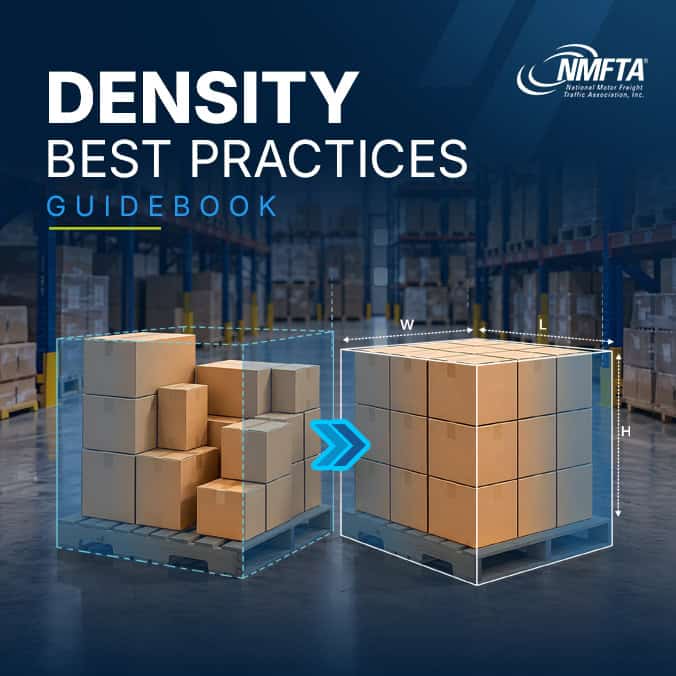
Calculate your shipment’s density in pounds per cubic foot (PCF). Enter the weight in pounds and outside dimensions in inches of the finished handling unit as it will be shipped, including its pallet and packaging.
Density Calculator
Enter the outside dimensions and total weight of a box, pallet, or handling unit to find its density in pounds per cubic foot (PCF).
This calculator is a decision-support tool and does not certify freight class. Freight class is determined by the applicable item in the current National Motor Freight Classification (NMFC). Height includes the pallet. For multi-pallet shipments, calculate each handling unit separately. Confirm your item and class with ClassIT+ before tendering freight.
Your density is a measurement, not a freight class. To determine the applicable NMFC class, identify the correct NMFC item and review its provisions.

What is Freight Density?
Freight density describes how much a shipment weighs relative to the space it occupies. In less-than-truckload (LTL) shipping, it is measured in pounds per cubic foot (PCF).
Created by NMFTA, the organization behind the National Motor Freight Classification® (NMFC)®, this calculator helps you get a density value before reviewing the classification provisions for your item.
For example, two pallets may weigh the same, but the taller pallet occupies more space. It therefore has a lower density. Many items in the NMFC have different classes for different density ranges.
How do you Calculate Freight Density?
First, multiply the handling unit’s length × width × height in inches. Divide by 1,728 to convert cubic inches to cubic feet. Then divide its weight in pounds by its cubic feet.
For example, a palletized handling unit measuring 48 × 40 × 45 inches and weighing 450 pounds occupies 50 cubic feet. Its density is 9 PCF.
Measure the Shipment You Will Hand to the Carrier
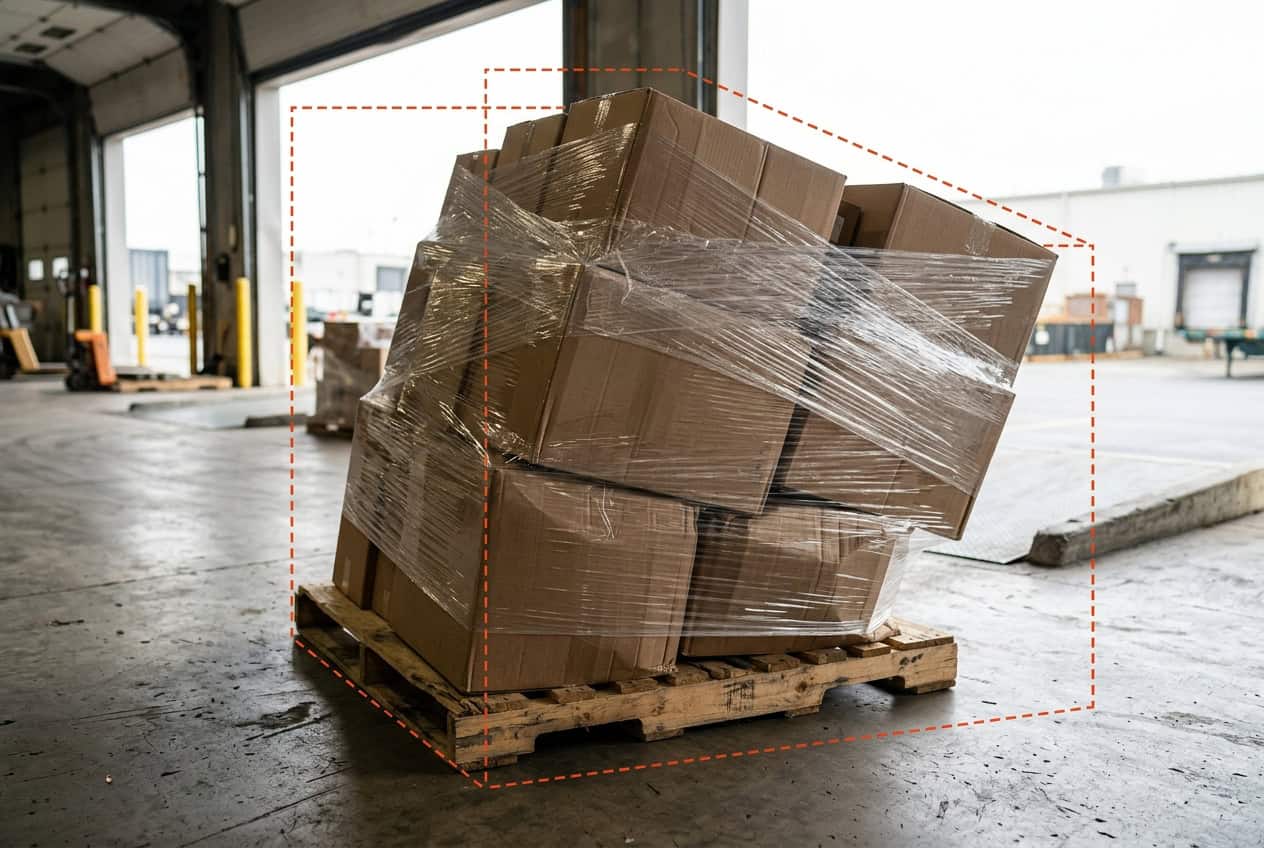
Use the greatest outside length, width, and height of the finished handling unit. Include the pallet, crate, boxes, wrapping, and any part that extends beyond the rest of the load. Use the weight of the complete handling unit as shipped.
If you change the packaging or pallet configuration after calculating density, measure and weigh it again. A change in height or overhang can change the cubic feet and the resulting PCF.
Does Density Determine Freight Class?
Sometimes. Density helps determine the class when the correct NMFC item has density-based subprovisions. Other NMFC items have different provisions, so a PCF result alone cannot tell you the correct item number or class. Handling, stowability, and liability can also affect classification.
Use ClassIT+® to find the applicable NMFC item and review its current description, packaging requirements, notes, and density ranges.
Frequently Asked Questions
Do I include the pallet when calculating freight density?
Yes. Measure the handling unit as it will be shipped, including the pallet in its outside dimensions and total weight.
Should I measure the product or its packaging?
Measure the finished shipping unit. A product may occupy less space than the box, crate, or palletized load presented to the carrier.
How do I measure an irregularly shaped handling unit?
Use its greatest straight-line length, width, and height, including anything that protrudes. Enter those outside measurements in the calculator.
How do I calculate density for multiple pallets?
Measure and weigh each pallet. If pallets differ in size or weight, calculate the cubic feet of each, add their cubic feet and weights, and divide total weight by total cubic feet. Whether they can be classified together depends on the applicable NMFC provisions and the commodities shipped.
Will a higher density always mean a lower freight class?
For an item with density-based class ranges, a higher PCF may place it in a lower class range. First confirm that the NMFC item applies to your commodity and check its specific provisions. Density is one part of classification.
Why might my density differ from the carrier’s measurement?
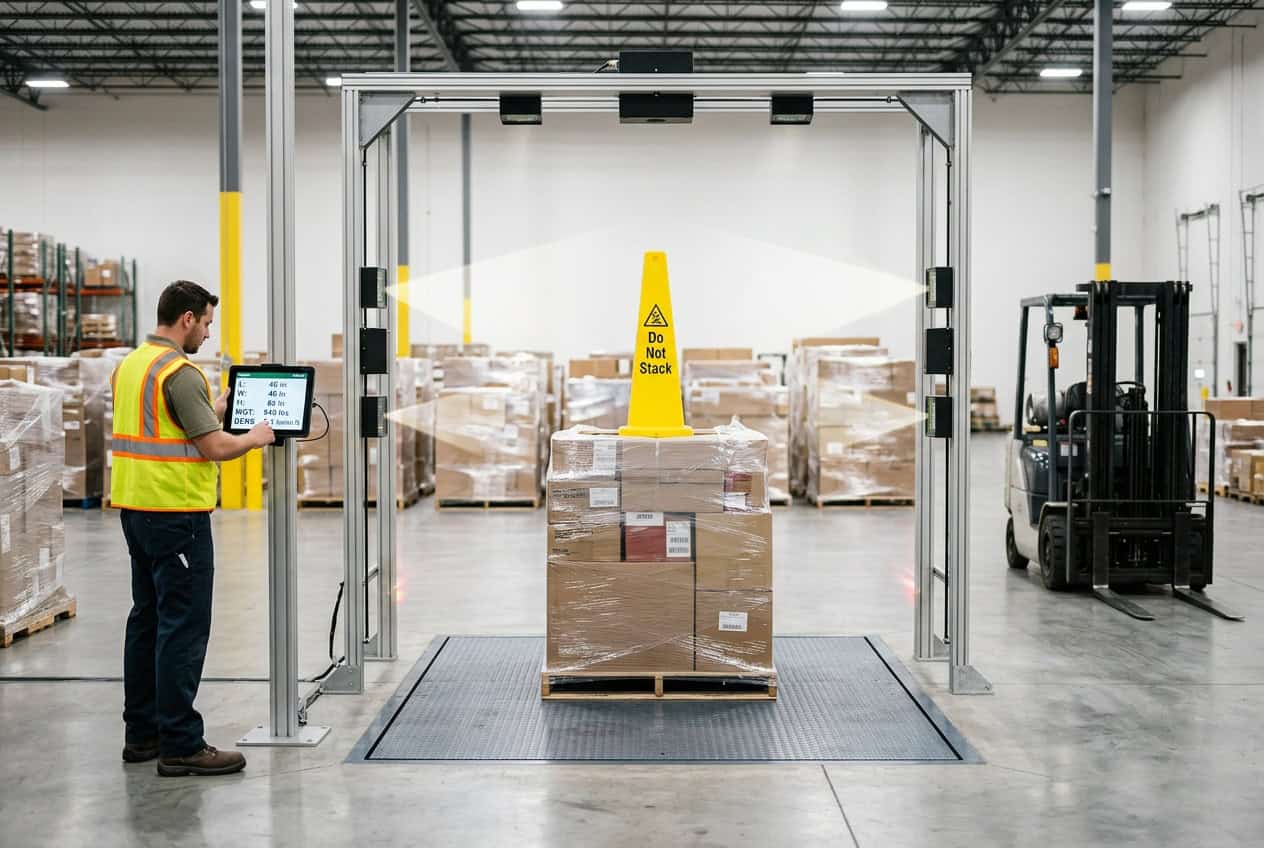
Dock scales and dimensioners certified under the National Type Evaluation Program (NTEP) operate within permitted tolerances. Dimensions can vary by plus or minus 0.5 inches. The weight tolerance is a fixed number of pounds, and it increases with the weight on the scale:
| Scale Weight | Tolerance |
|---|---|
| Up to 2,500 lbs | ± 5 lbs |
| 2,505 to 5,000 lbs | ± 10 lbs |
| 5,010 to 10,000 lbs | ± 20 lbs |
On a typical LTL handling unit, the dimensional tolerance has the larger effect on PCF. On a 900 lb pallet, ±5 lbs is about 0.5% of the weight. On a 48×40 load about 50 inches tall, a reading 0.5 inches high on all three dimensions lowers PCF by roughly 3%. On a load built close to a class boundary, these tolerances combined with even a slight lean can be enough to trigger a reclassification. Building in some PCF margin beyond the class threshold protects against all three.
Know Your Density. Then Check Your Classification.
Use your PCF result to help apply the correct density range when your NMFC item calls for one.
Find your NMFC item in ClassIT+