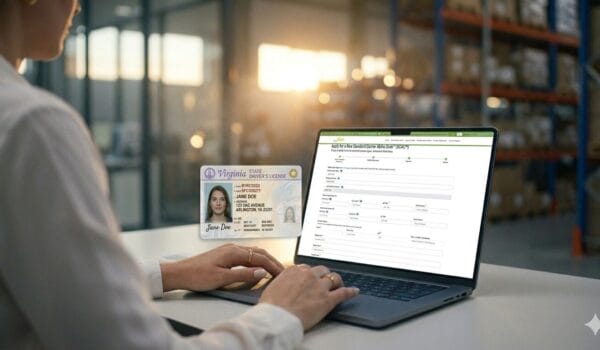
Cargo theft and double brokering represent significant challenges within the logistics industry. As fraudulent schemes become increasingly sophisticated, one straightforward yet effective tool continues to play a crucial role in safeguarding the supply chain: the Standard Carrier Alpha Code® (SCAC™).
SCAC verification is a vital line of defense.
- Verification of Carrier Identity through SCAC Codes
Fraudsters frequently impersonate legitimate carriers. A valid SCAC, when cross-referenced with records from the Federal Motor Carrier Safety Administration (FMCSA) and the National Motor Freight Traffic Association, Inc.® (NMFTA)™, aids in confirming the following:
- Legal business name;
- Motor Carrier (MC)/United States Department of Transportation (USDOT) authority; and
- ID Verification.
It is imperative to ensure that the SCAC matches the associated carrier name.
- Caution Regarding Counterfeit Documentation
The presence of counterfeit rate confirmations and fraudulent Bills of Lading (BOLs) is prevalent within schemes involving theft and double brokering. A discrepancy or invalidity in the SCAC often serves as a preliminary indicator of such fraudulent activities.
- Enhancing Digital Tracking and Electronic Data Interchange Security
SCACs are integral components embedded within:
- Load tenders;
- Shipment updates; and
- Delivery confirmations.
The rejection of invalid SCACs effectively prevents unauthorized carriers from entering the digital workflow, thereby enhancing security measures.
- Assisting in the Detection of Double Brokering
Double brokering frequently manifests as:
- A different SCAC appearing on the BOL;
- A SCAC that does not correspond with the carrier’s authorized status; and
- The presence of a “ghost carrier” lacking a valid SCAC.
Conducting consistent SCAC checks is essential for deterring unauthorized handoffs before they occur.
In Summary
Although SCACs may appear to be minor elements within the logistics framework, they serve as one of the most efficacious tools available for:
- Authenticating carriers;
- Preventing identity fraud;
- Reducing instances of cargo theft;
- Combating double brokering; and
- Ensuring the integrity of freight.
In a market marked by increased risk, verifying SCACs are essential.
Verify your carriers with confidence—use SCAC Verified to confirm identity and help protect your shipments from fraud.
Explore the Freight Fraud Prevention Hub to access best practices, learn the fundamentals, and stay ahead of evolving fraud risks.