
For years, freight fraud has quietly chipped away at the foundation of trust that keeps America’s supply chain moving. Impersonation, double brokering, and fictitious pickups are all major issues. The schemes are becoming more sophisticated and more expensive for everyone involved in freight transportation.
At the National Motor Freight Traffic Association, Inc.® (NMFTA)® we believe it’s time to stop chasing fraud after it happens and start preventing it before it begins.
The Problem: A System Built on Trust, Now Exploited by Deception
As FreightCaviar recently noted in their eye-opening analysis of Federal Motor Carrier Safety Administration (FMCSA) data, freight fraud thrives in tangled, overlapping systems where identity is easy to fake and hard to verify. They put it simply:
“We must shift our focus from a reactionary to a proactive approach… Until we confront the tangled, overlapping systems that allow freight fraud to thrive, we’ll continue to chase solutions that merely sound the alarm.”
That’s exactly the shift NMFTA is making.
The Change That Could Stop Fraud at Its Source
For decades, the Standard Carrier Alpha Code® (SCAC)® has served as the universal identifier for carriers moving goods across North America. It’s required at ports, border crossings, and in millions of transactions between shippers, brokers, and carriers every year. But until now, the system didn’t verify the person behind the code.
That’s changing.
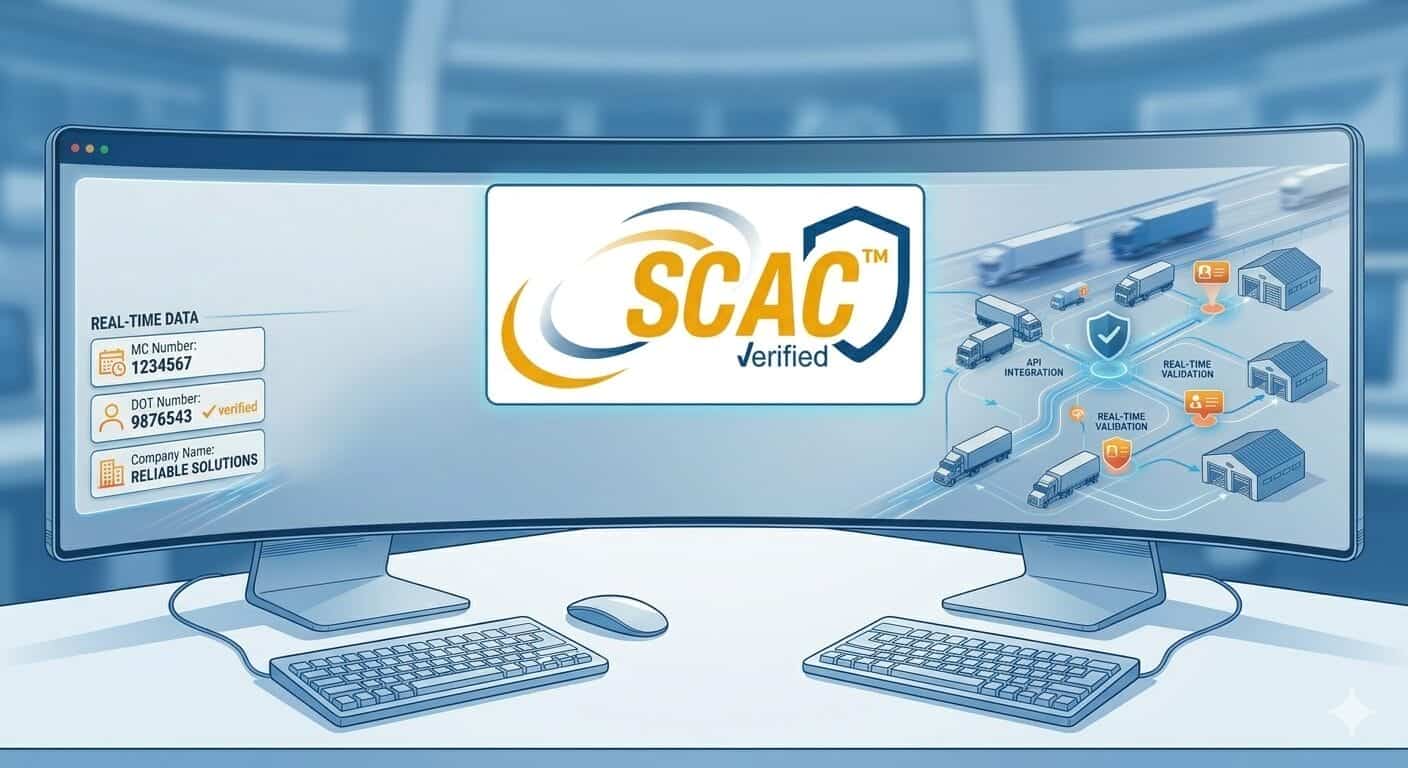
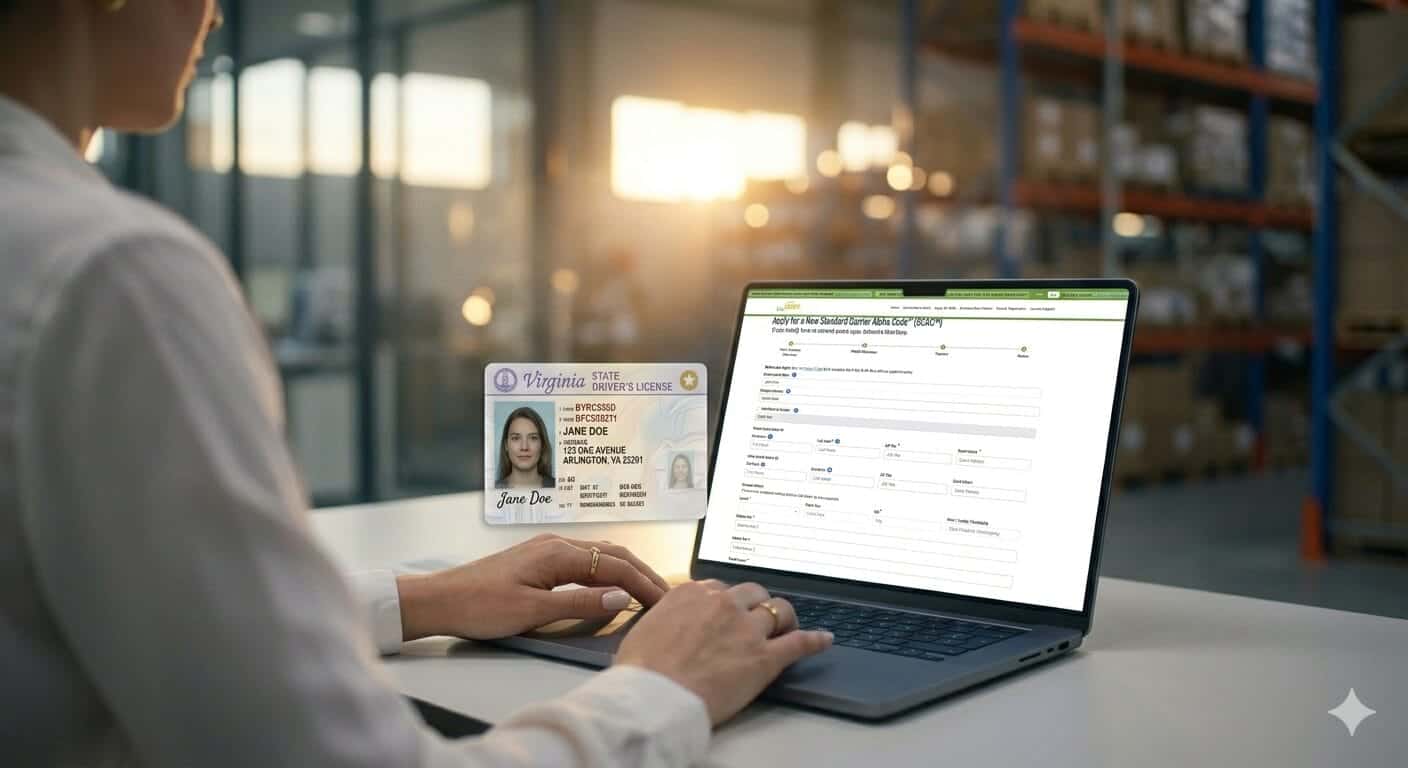
Beginning February 2026, NMFTA will introduce identity verification for all SCAC applications and renewals for non–Class 8 carriers. Through our partnership with Persona, each SCAC will be tied to a verified individual—transforming SCAC from a static code into an identity-assured trust credential.
This step strengthens the very backbone of freight identity. It helps:
- Stop fraud and increase security by ensuring every SCAC is linked to a verified, real person.
- Help fight fraud by creating a universal, checkable signal of trust at tender and pickup.
- Avoid imposter websites by directing users to a single, verified system governed by NMFTA.
- Be good stewards of security—not because it’s required, but because it’s the right thing to do for our industry.
Why NMFTA Is Leading This Effort
As the official administrator of the SCAC system, NMFTA and its customers have the responsibility to protect it. Our role isn’t to react to fraud after it happens; it’s to strengthen the systems that make freight safer.
And this isn’t our first stand against crime in trucking.
The NMFTA cybersecurity team has already equipped fleets and IT leaders with tools like the Cargo Crime Reduction Framework and Vendor Risk Assessment Checklist. We’ve hosted panels with industry experts at the NMFTA Cybersecurity Conference, launched public education campaigns, and developed technical standards to harden carrier systems against digital cyberthreats.
Now, through SCAC Verified, we’re taking the same proactive approach to the business side of fraud—closing the loopholes that criminals exploit and restoring confidence in the credentials that move freight.
A Collective Effort to Protect the Supply Chain
Fraud isn’t a problem that any one company can solve alone. It’s a shared threat that demands a shared solution. By making SCAC identity-verified, we’re giving shippers, brokers, third-party logistics providers (3PLs) and carriers a universal trust signal—one that works across every system, every transaction, and every mile.
This is about making identity misuse unprofitable and trust standard.
Learn more about the SCAC ID verification process and upcoming resources at info.nmfta.org/scac-verified.
Sign up to receive updates on NMFTA’s freight fraud prevention initiatives and cargo theft news at info.nmfta.org/scac-verified#subscribe.
Cargo Theft by the Numbers
- The annualized cost of cargo theft to the U.S. freight transportation industry is up to $6.6 billion, which works out to more than $18 million per day. truckingresearch.org
- Carriers (motor carriers) average more than $520,000 in annual theft losses. scdigest.com
- Logistics Service Providers (LSPs) average more than $1.84 million in annual losses. scdigest.com
- According to NICB, cargo theft losses increased by 27% in 2024 and are forecast to rise another 22% in 2025. nicb.org
- NICB also cites an industry estimate of up to $35 billion in annual losses from cargo theft and related supply-chain crime. freightwaves.com
- In one report, it was noted that incidents of theft/fraud increased 1,500% since 2021. freightwaves.com
- From Overhaul: In 2024 the U.S. saw 2,217 recorded cargo theft events; this represented about a 49% increase over the previous comparable period. nicb.org
- Overhaul also reported that in Q2 2025 there were 525 thefts in the U.S., a 33% increase compared to Q2 2024. Overhaul
- According to the TIA “State of Fraud in the Industry (April 2025)” report: TIA
- Between September 1, 2024 and February 28, 2025, there were 1,611 fraud reports filed across seven key categories — a 65% increase compared to the prior period. freightwaves.com
- 97% of respondents indicated truckload freight is the most fraud-prone mode. AJOT
- 34% of respondents said unlawful brokerage (fraudsters posing as brokers) is the top fraud scheme they face. Transportation News and Trends
- 83% of respondents experienced at least three types of fraud in the past six months. Food Logistics
- Geographic detail: According to Overhaul, in the first half of 2024 the U.S. recorded a 49% increase in cargo theft incidents, and the average loss per incident jumped 83% compared to the same period in 2023. Food Logistics
- California and Texas alone (plus Illinois) accounted for about 46% of all cargo theft incidents in 2024. Burns & Wilcox
- In cargo theft via rail & freight rail context, the Association of American Railroads noted that organized cargo theft cost major railroads more than $100 million in 2024. aar.org