Board Member Spotlight: Clete Cordero, Southeastern Freight Lines
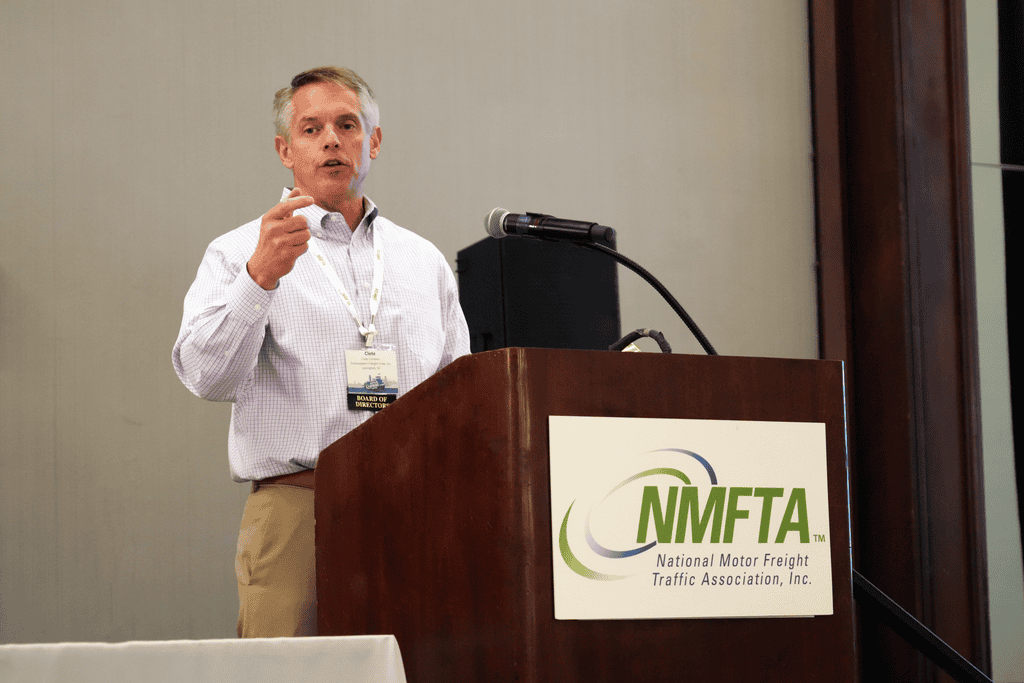
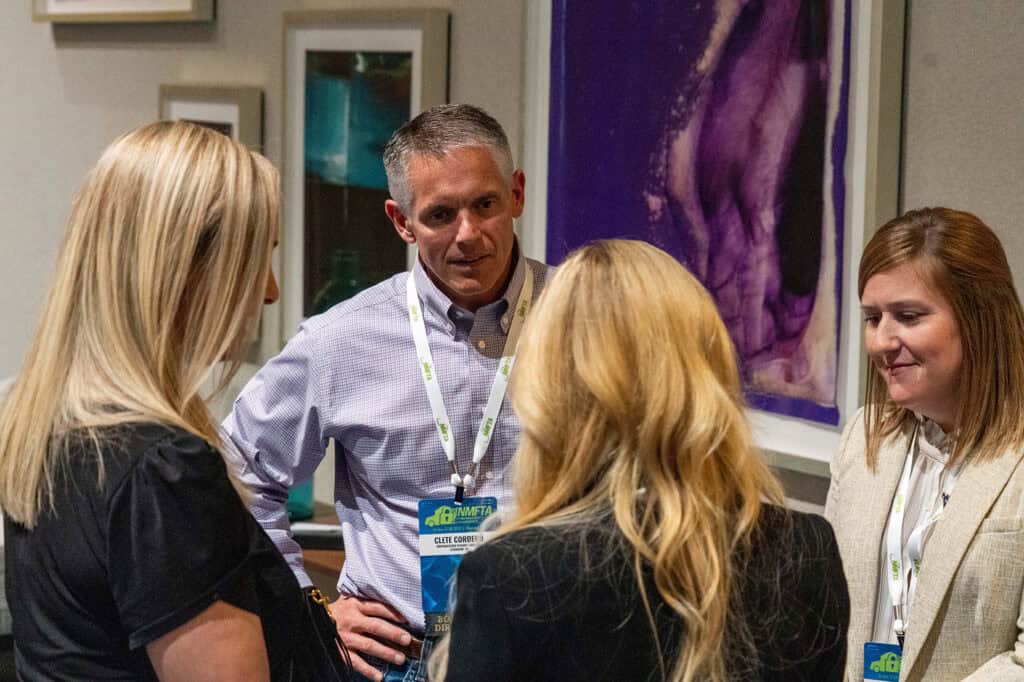
As part of our Board Member Spotlight series, we’re pleased to feature Clete Cordero of Southeastern Freightlines. This series highlights the NMFTA members helping guide the future of the association, and offering a closer look at their experience, perspectives, and vision for the industry.
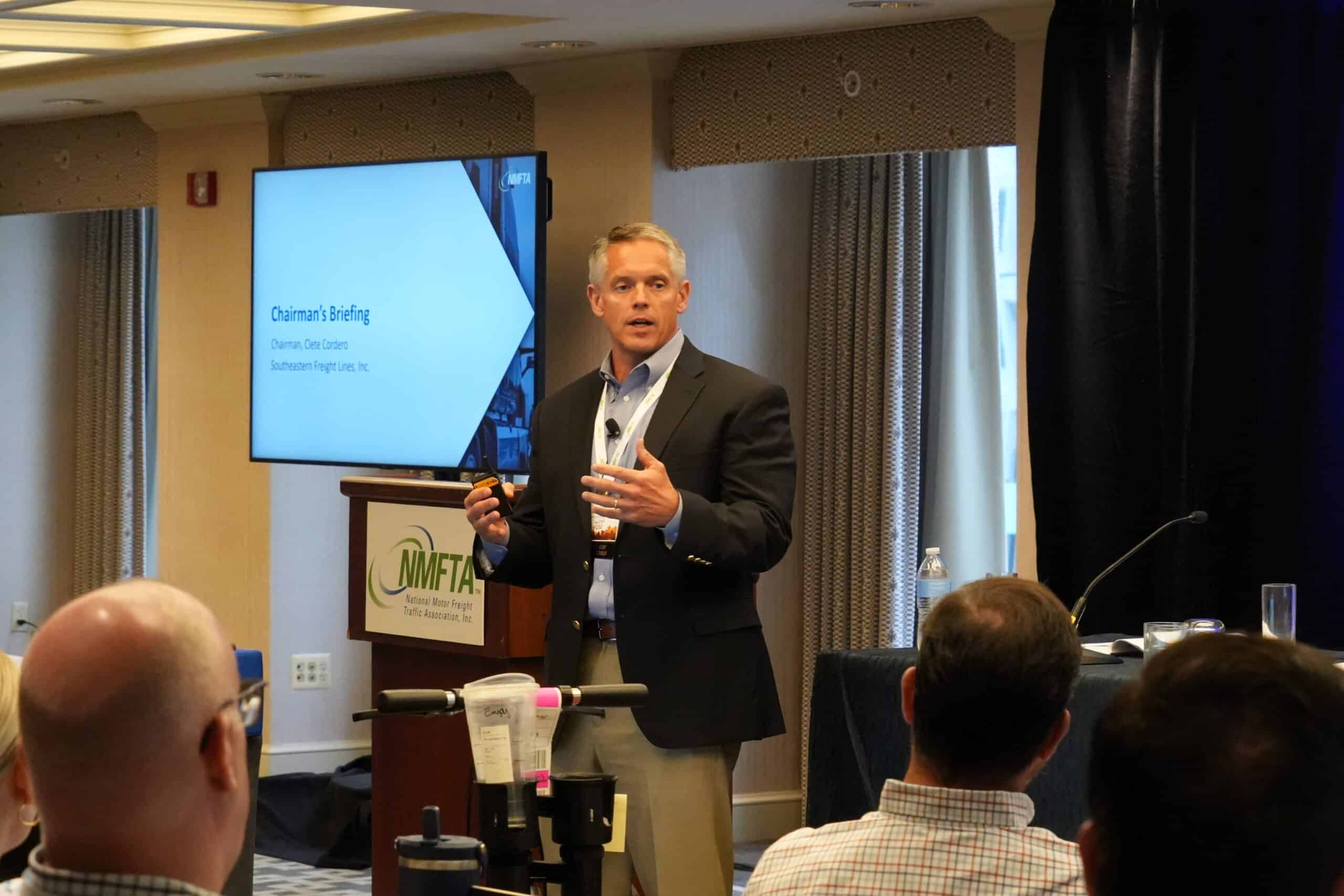
As Clete wraps up his two-year term as Chairman of the NMFTA Board of Directors, he reflects on the experiences, conversations, and people that have shaped his time in the role. In this Q&A, he shares his family’s deep roots in trucking, the NMFTA initiatives he is most proud to have helped advance, and why collaboration across the LTL industry continues to be so important. He also offers a more personal look at the experiences and interests that have shaped him both inside and outside the industry.
How did you get your start in the trucking industry? What drew you to the industry, and what made you stay?
Trucking has really always been part of my family’s story. I grew up around the industry, so in many ways, it wasn’t something I necessarily went looking for—it was already part of who we were.
My grandfather came to the United States from Cuba to play Major League Baseball. During the offseason, he worked on the dock for Pacific Intermountain Express, better known as PIE. When his baseball career ended, he stayed in LTL trucking and worked his way up from the dock into an executive position. I’ve always thought that was a pretty remarkable journey—from coming to this country to play professional baseball, to building an entirely different career and a life for his family in the trucking industry.
And he wasn’t the only connection. My mom’s father was an LTL driver, my father was an LTL executive, and my wife’s family was in the trucking business as well. So trucking has been woven through both sides of our family for generations.
Growing up with that kind of history, you get an appreciation for the industry from a lot of different perspectives. You understand that the person on the dock, the driver behind the wheel, and the executive making decisions are all part of the same operation—and that every one of those roles matters.
That family history is what drew me to trucking, but the industry itself is what made me stay. It’s an industry built on relationships, hard work, problem-solving, and people who take a tremendous amount of pride in what they do. It’s also an industry that never stands still. There is always another challenge to solve, another change to adapt to, and another opportunity to make things better.
For me, trucking has never just been a career. It’s part of my family’s history, and I’m proud to have had the opportunity to carry that forward.
During your two years as Chairman, what NMFTA initiatives, conversations, or moments have been most meaningful to you?
The conversations and work around moving more items to full-scale density have probably been the most meaningful to me. This is an issue that goes right to the heart of how our industry is changing and how the NMFC needs to evolve along with it.
What I’ve appreciated most is the amount of thoughtful discussion that has gone into that work. Changes of this magnitude don’t happen overnight, and they shouldn’t. They require bringing people together from across the LTL industry, listening to different perspectives, working through the operational and practical implications, and ultimately determining what makes the most sense for the industry as a whole.
As Chairman, it has been especially meaningful to be part of those conversations and to watch NMFTA take on an issue that is so fundamental to the future of freight classification. Moving toward a more density-based approach represents a significant evolution for the NMFC, and I’m proud of the work that has been done to move that conversation forward in a thoughtful and deliberate way.
For me, that’s what NMFTA does best. We bring the industry together to tackle complicated issues that no single carrier or company can solve on its own. Being able to help guide that process during my time as Chairman is something I’ll look back on with a great deal of pride.
Was there a particular moment during your chairmanship that made you think, “This is why this work matters”?
There wasn’t just one moment—there were many. What stands out to me most is seeing carriers that compete fiercely every day come together at NMFTA and work side by side to make the industry better as a whole.
I’ve said many times that when we come to NMFTA, we “leave our carrier hats at the door and put on our industry hats.” I think that really captures what makes this organization and the work we do together so important.
We may come from different companies, with different perspectives, different operating models, and sometimes very different opinions about how to approach an issue. But when we sit down together at NMFTA, the conversation becomes bigger than any one carrier. We’re looking at the challenges facing LTL as an industry and asking what we can do collectively to move it forward.
I’ve witnessed that happen over and over again during my time as Chairman—people listening to one another, working through disagreements, sharing their expertise, and ultimately finding common ground because we all care deeply about the future of this industry.
Those are the moments when I think, “This is why this work matters.” No individual carrier can address every challenge facing our industry on its own. But when we bring the right people together and are willing to take off our individual company hats for a while, we can accomplish things that benefit the entire industry. That spirit of collaboration is one of the things I’m most proud to have been part of during my chairmanship.
Is there something about NMFTA or the trucking industry that you wish more people outside the industry understood?
I wish more people understood just how much complexity is involved in something that, from the outside, can look incredibly simple: picking up a shipment in one city in the afternoon and delivering it 600 miles away the next morning.
For the customer, it may feel as straightforward as handing freight to a driver and seeing it arrive at its destination the next day. But there is an enormous amount of coordination that has to happen in between. That shipment has to be picked up, brought into a terminal, unloaded and sorted, moved through the network—sometimes touching multiple facilities—and ultimately get onto the right truck for final delivery. All of that has to happen on a very tight timeline.
And a good amount of that work in LTL happens while most of the country is sleeping.
Throughout the night, there are drivers on the road, dockworkers moving freight, dispatchers and operations teams coordinating equipment and people, and technology working behind the scenes to keep thousands of shipments moving through interconnected networks. One delay or disruption can have a ripple effect, so executing consistently requires an incredible amount of planning, discipline, teamwork, and problem-solving.
I grew up around this industry, so I’ve always had an appreciation for what it takes to make that happen. But I think if more people could see what goes on between that afternoon pickup and that next-morning delivery, they would have a very different appreciation for LTL trucking and the people who keep it moving.
There’s an entire industry at work overnight so that businesses across the country can wake up and keep doing business the next day.
What have you learned from the people you’ve worked alongside—fellow Board members, NMFTA staff, and others across the industry—during your time as Chairman?
One of the things that has impressed me most during my time as Chairman is the culture of the NMFTA staff. It is truly first rate, and you see it not only in the way they serve the industry, but also in the way they serve and support one another.
When you work closely with an organization as a Board member and Chairman, you get to see things that others may not always see. You see the work that happens behind the scenes, the preparation that goes into serving members, and the willingness of people to step in and help each other when something needs to get done. There is a real sense among the NMFTA team that they are working toward something bigger than their individual roles.
That same spirit carries over into how they serve the industry. The people at NMFTA care deeply about the work they do and about the people and companies they serve. They are willing to listen, learn, tackle difficult issues, and continually look for ways the organization can provide greater value to the industry.
I’ve also been reminded through my fellow Board members and others across the industry just how much knowledge and experience exists within LTL. When you bring together people who are willing to share that experience and work toward a common goal, you can accomplish a great deal.
How do you like to spend a perfect weekend when you’re not working?
For me, a perfect weekend is pretty simple: being on the lake with my family. It’s a chance to slow down, spend time together, and enjoy being away from the day-to-day pace of work. There’s really nowhere I’d rather be.
What’s a favorite trip you’ve taken, and what made it memorable?
One of my favorite trips was spending 10 days traveling through Cuba and playing baseball against Cuban teams. It was an incredible experience—not only getting to see the country, but experiencing it through baseball and having the opportunity to play against local teams.
Baseball has always been an important part of my family’s story, so combining that with a trip to Cuba made it particularly memorable. It’s one of those experiences that was truly unique and something I’ll never forget.
What’s something you’re surprisingly good at?
Seinfeld trivia. I’ve watched enough episodes over the years that I can hold my own on just about anything “Seinfeld.” It’s probably one of those things that shocks and surprises people who know me.