2025 was the year the transportation sector stopped asking whether cyber threats might disrupt operations. We had our answer; we saw daily proof that these threats are very real, and they are impacting operations now.
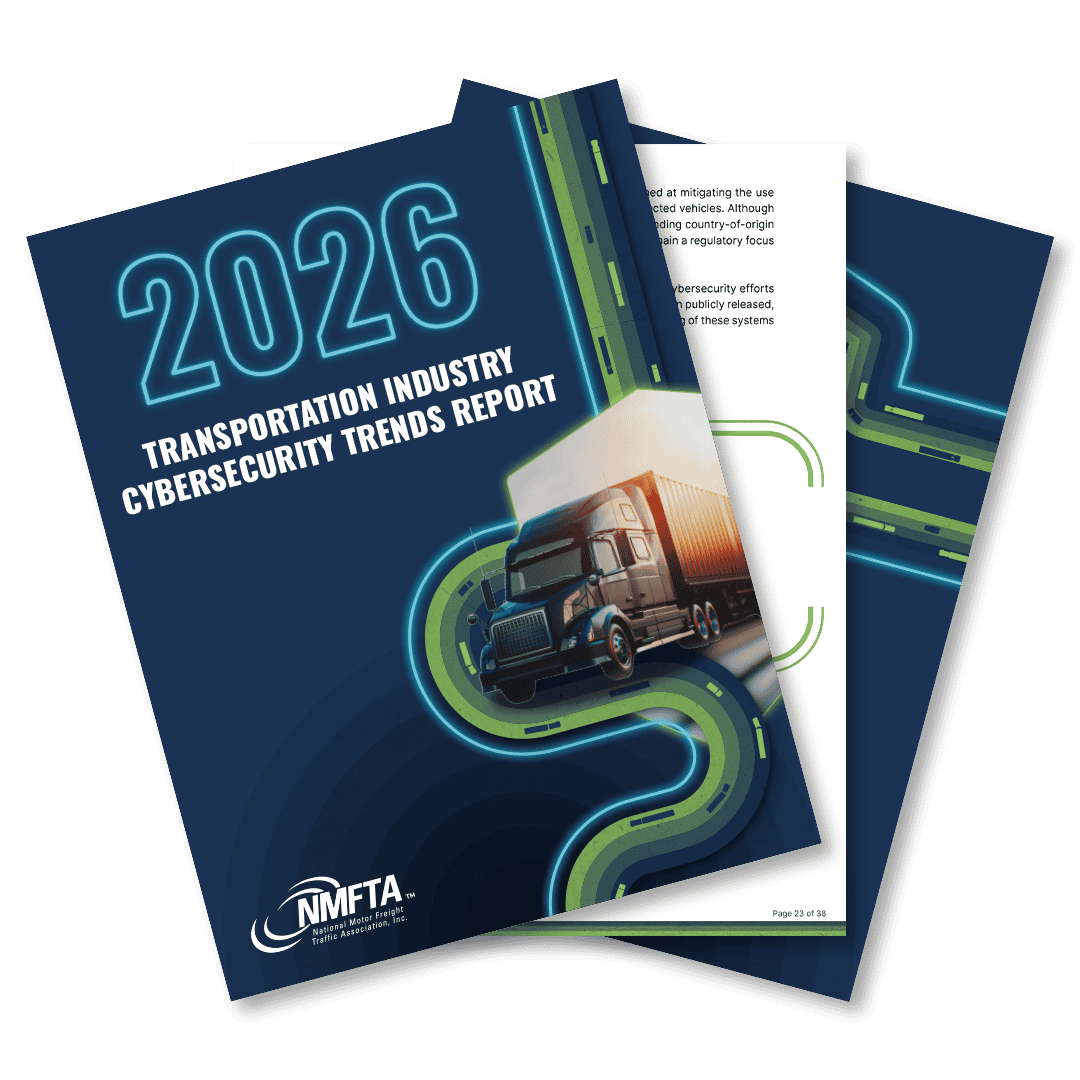
From AI-supercharged social engineering to the seamless blending of digital compromise and physical cargo theft, the past year pushed fleets, brokers, and shippers into the most complex threat environment the industry has ever faced. And according to NMFTA’s 2026 Transportation Industry Cybersecurity Trends Report, the challenges coming next will redefine what “resilience” truly means in this industry.
The transportation industry is now a high-value, high-frequency target, and adversaries are leveling up fast.
Cybercrime used to be dominated by generalists engaged in simple crimes of opportunity against poorly protected targets. However, these bad actors have evolved into structured enterprises with recruiting pipelines, HR teams, specialized departments, and AI-driven reconnaissance. They are no longer just stealing data, or even just encrypting it; they are weaponizing it in devastating and difficult to detect ways. The data shows that digital compromise is now a leading precursor to stolen freight. Identity fraud, FMCSA account hijacking, and load-board impersonation have become standard tools for modern cargo crime networks.

But this year’s report isn’t all a warning, it’s also a roadmap. The transportation sector made measurable strides in 2025: Improved awareness training, stronger collaboration between fleets and federal agencies, and broader adoption of MFA, more mature cyber-hygiene controls, and incident response planning. These gains will set a strong foundation for the sector’s next phase of cybersecurity maturity.
That maturity is needed. The 2026 report highlights several trends accelerating in the year ahead:
- Attack automation accelerates the speed of compromise beyond human response ability;
- AI-assisted social engineering becomes nearly undetectable by traditional methods;
- Weaponization of legitimate remote access tools and APIs accelerates;
- Escalation of supply-chain compromise through SaaS vendors and integrations; and
- Regulatory shifts, including CIRCIA, will reshape operational accountability requirements.
For fleet leaders, cybersecurity teams, and industry partners, the 2026 Transportation Cybersecurity Trends Report is more than a look back; it’s a strategic briefing on what’s coming and how to prepare for it.
The full 2026 Transportation Industry Cybersecurity Trends Report is available now. Download the report today.
If your organization touches freight at any point in the supply chain, this is the one report you can’t afford to miss.
Stay Informed. Stay ready. And get prepared for the year ahead.